
Introduction to Ketu in Astrology
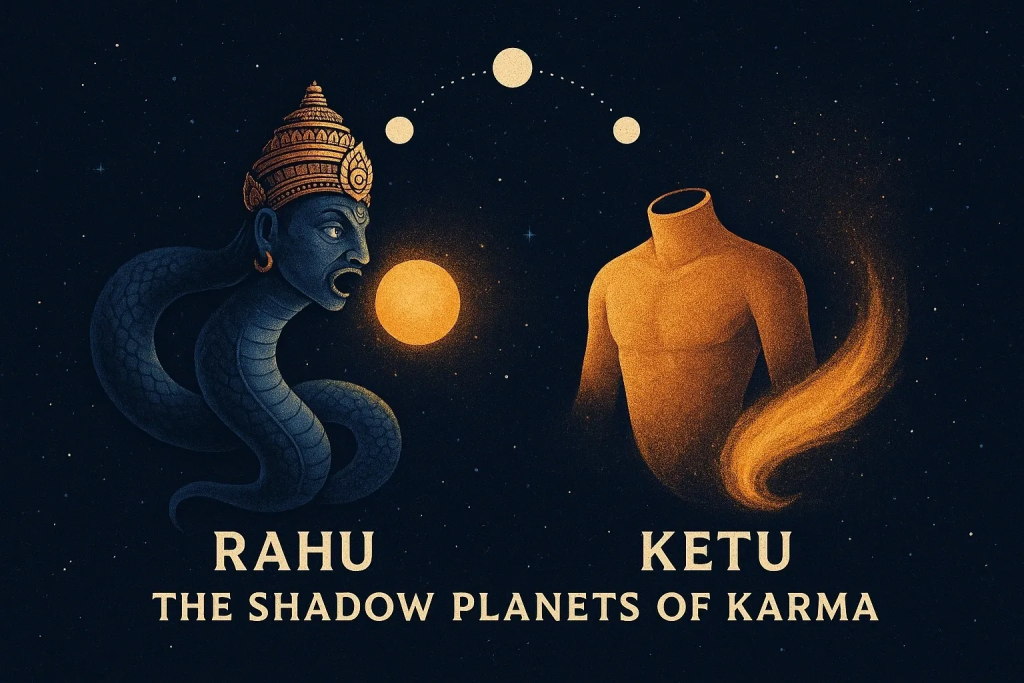
In astrology, Ketu represents spiritual wisdom, detachment, intuition, and inner transformation. It is known as a shadow planet because it does not have a physical form like the other planets. Instead, Ketu marks an important astronomical point linked with eclipses and lunar nodes.
In Vedic astrology, Ketu is the south node of the Moon. It always stands opposite Rahu in the zodiac. While Rahu points toward material desire and ambition, Ketu points toward spiritual growth and freedom from worldly attachment.
Ketu often encourages people to step back from material distractions. It pushes them to focus on inner awareness and deeper truth. Its influence can create moments of reflection and spiritual insight.
At times, Ketu may also bring confusion or sudden change. However, these experiences often lead to transformation and wisdom. Understanding Ketu in astrology helps reveal where a person learns lessons about detachment, inner growth, and spiritual awareness.
Symbolism of Ketu Grah in Vedic Astrology
In Vedic astrology, Ketu symbolizes liberation, intuition, and mystical insight. It represents the spiritual side of life and encourages people to look beyond material success.
Ketu is often linked with wisdom gained through past experience. Many astrologers believe it reflects karmic knowledge carried from earlier lifetimes. Because of this, Ketu often influences intuition and inner understanding.
Ketu also represents separation from illusion. While Rahu creates strong desires, Ketu encourages detachment from those desires. Through this process, people begin to focus on deeper truth and spiritual awareness.
For this reason, Ketu is often seen as a planet of self-realization and inner development.
Astronomical and Astrological Nature of Ketu
Astronomically, Ketu is not a physical planet. It is the south node of the Moon, the point where the Moon’s orbit crosses the Sun’s path while moving downward.
This point is connected with eclipses. Because of that, Ketu is strongly linked with eclipse energy and transformation.
Ketu moves backward through the zodiac, just like Rahu. It usually spends about 18 months in each zodiac sign and completes a full cycle in around 18 years.
In astrology, Ketu is often compared with Mars because of its sharp and intense energy. However, Ketu works in a more spiritual and inward way.
Ketu is traditionally associated with smoky colors, mystical symbolism, meditation, and spiritual exploration.
What Ketu Represents in a Birth Chart
In a birth chart, Ketu represents detachment, spiritual insight, and karmic lessons. It shows the areas of life where a person may feel less interest in material success.
People with a strong Ketu often have deep intuition. They may also feel naturally drawn toward spirituality, philosophy, or inner exploration.
Ketu can create sudden changes that push a person toward self-reflection. At first, these experiences may feel difficult. Over time, however, they often lead to greater understanding and inner strength.
Because of its spiritual nature, Ketu encourages people to look beyond outer achievements and search for deeper meaning.
Ketu as the Planet of Spiritual Liberation
Ketu is widely known as the planet of moksha, or spiritual liberation. Its influence helps people release attachment and discover inner peace.
While Rahu focuses on worldly ambition, Ketu shifts attention toward self-awareness and spiritual growth.
Ketu often inspires interest in meditation, philosophy, and spiritual practice. It encourages people to explore deeper levels of consciousness.
Through these experiences, Ketu helps develop wisdom that goes beyond material success.
Ketu in Different Zodiac Signs
The zodiac sign of Ketu shapes the way spiritual growth and detachment are expressed.
Ketu in Aries may create strong independence and spiritual courage. Ketu in Taurus often encourages detachment from wealth and possessions.
Ketu in Gemini may bring deep reflection in communication and learning. Ketu in Cancer often influences emotional healing and spiritual sensitivity.
Ketu in Leo may reduce the desire for recognition and encourage humility. Ketu in Virgo can combine analytical thinking with spiritual insight.
Ketu in Libra may create lessons about balance and relationships. Ketu in Scorpio often increases interest in hidden knowledge and transformation.
Strength of Ketu in Astrology
The strength of Ketu shows how its spiritual energy works in a chart.
A strong Ketu often gives intuition, wisdom, and deep insight into life. It may also support meditation, spiritual study, and philosophical thinking.
However, if Ketu is poorly placed, it may create confusion, isolation, or a lack of direction.
For this reason, astrologers study Ketu carefully when reading karmic lessons and spiritual growth.
Ketu and Career in Astrology
Ketu influences careers connected with research, healing, spirituality, and deep analysis.
It supports professions related to psychology, mysticism, investigation, spiritual guidance, and scientific research.
People with a strong Ketu often do well in fields that require concentration, independence, and deep thinking.
Ketu also encourages people to explore hidden knowledge and unconventional paths.
Spiritual Importance of Ketu
Ketu has deep spiritual importance in Vedic astrology. It represents the path toward enlightenment and freedom from material illusion.
Through detachment, Ketu encourages people to discover inner peace and wisdom.
In spiritual traditions, Ketu is often linked with meditation, self-realization, and higher consciousness.
By turning people away from distraction, Ketu helps them focus on deeper truth and spiritual understanding.
Conclusion
Ketu in astrology represents spiritual wisdom, detachment, transformation, and liberation. As the south node of the Moon, it reflects karmic lessons and inner awareness.
Although Ketu may sometimes bring confusion or sudden change, its deeper purpose is spiritual growth.
Understanding Ketu in astrology helps people see where they can develop wisdom, balance, and inner strength.
When understood properly, Ketu becomes a powerful force for transformation, self-discovery, and spiritual awakening.
Also Read