
Introduction to Moon in Astrology
In astrology, the Moon holds a deeply important role because it represents the mind, emotions, intuition, and inner world of a person. In Vedic astrology, the Moon is known as Chandra Graha, and it reflects how a person feels, reacts, and experiences life internally. While the Sun represents the soul and identity, the Moon represents the emotional nature and mental state.
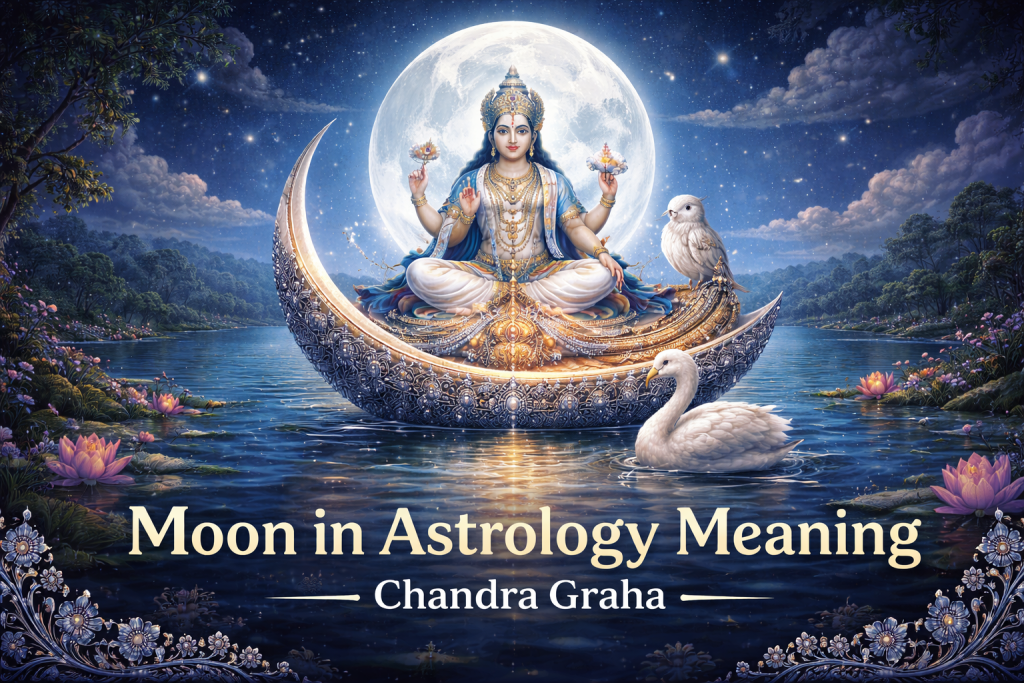
The Moon moves faster than any other planet in astrology, completing its journey through the zodiac in about 27 days. Because of this rapid movement, the Moon strongly influences daily moods, emotional responses, and mental stability. Astrologers consider the Moon extremely important when analyzing a birth chart because it reflects how a person experiences happiness, comfort, and emotional fulfillment.
The position of the Moon in the horoscope reveals how a person processes emotions, builds relationships, and seeks emotional security. A strong Moon can create calmness, compassion, and emotional intelligence, while a weak or afflicted Moon may create emotional instability or anxiety.
Understanding the Moon in astrology helps people understand their mental patterns, emotional needs, and the way they respond to life’s situations.
Symbolism of Chandra in Vedic Astrology
In Vedic astrology and ancient Indian mythology, Chandra Dev represents the gentle and nurturing energy of the universe. The Moon symbolizes calmness, imagination, sensitivity, and emotional awareness. Unlike the Sun, which represents authority and power, the Moon represents softness, receptivity, and emotional connection.
Ancient texts describe Chandra as a radiant deity associated with beauty, nourishment, and creativity. The Moon reflects light from the Sun, which symbolizes the mind reflecting the consciousness of the soul. Because of this symbolic relationship, astrology views the Moon as the controller of the mind.
The Moon also connects strongly with the mother and maternal influence. It reflects nurturing, care, emotional bonding, and family comfort. A strong Moon often indicates a caring personality and a deep connection with family values.
Chandra also symbolizes imagination and creativity. Many artists, writers, musicians, and creative thinkers often have a strong Moon in their birth chart.
Astronomical and Astrological Nature of the Moon
Astronomically, the Moon is Earth’s natural satellite and the closest celestial body to our planet. Its gravitational pull influences ocean tides, and its cycles shape many natural rhythms on Earth.
Astrology reflects this natural influence by connecting the Moon with emotional tides and mental fluctuations. The Moon moves through each zodiac sign in about two and a half days, which explains why human emotions and moods can change quickly.
In astrology, the Moon is considered a benefic planet when strong and well placed. It represents nourishment, mental peace, imagination, and emotional sensitivity.
The Moon rules the zodiac sign Cancer (Karka Rashi) and becomes exalted in Taurus, where emotional stability and comfort reach their highest expression. The Moon becomes debilitated in Scorpio, where emotional intensity may create inner turbulence.
The Moon also governs Monday, the northwest direction, and the gemstone pearl. Pearl is traditionally associated with calming the mind and strengthening emotional stability.
What the Moon Represents in a Birth Chart
In a horoscope, the Moon represents the mind and emotional consciousness. It shows how a person reacts emotionally to events and how they seek comfort and happiness.
The Moon influences many important aspects of life including emotional well-being, imagination, intuition, habits, and mental stability. It also reflects how a person connects with family and how they experience nurturing and care.
A strong Moon often creates calmness, emotional intelligence, and compassion. Such individuals may easily connect with others and maintain emotional balance even during challenging situations.
A weak or afflicted Moon may produce emotional sensitivity, mood swings, or mental stress. In astrology, the Moon therefore becomes a key indicator of mental health and emotional resilience.
The Moon also determines the Rashi or Moon sign, which plays a central role in Vedic astrology predictions. Many astrological forecasts are based on the Moon sign rather than the Sun sign.
Moon as the Indicator of the Mind
Vedic astrology considers the Moon as the karaka of the mind (Manas Karaka). The Moon reflects how a person thinks, feels, and perceives the world.
Because the Moon controls emotional responses, it influences decision-making and personal behavior. People with a stable Moon usually demonstrate patience, emotional awareness, and balanced thinking.
The Moon also governs memory and imagination. It influences creativity, dreams, and subconscious patterns. A well-supported Moon may create strong intuition and empathy.
When the Moon receives positive influences from planets such as Jupiter or Venus, it often produces kindness, wisdom, and emotional harmony. When negative influences affect the Moon, the person may struggle with emotional turbulence or confusion.
Astrologers study the Moon carefully to understand mental patterns and emotional behavior.
Moon in Different Zodiac Signs
The zodiac sign where the Moon is placed shapes emotional responses and personality traits. Each sign expresses lunar energy differently.
When the Moon appears in Aries, emotions become direct and energetic. Individuals may react quickly and show strong enthusiasm.
When the Moon appears in Taurus, emotional stability and comfort become important. These individuals often seek security and peaceful environments.
When the Moon appears in Gemini, curiosity and communication shape emotional expression. These individuals enjoy sharing ideas and conversations.
When the Moon appears in Cancer, emotional depth and nurturing instincts become powerful. This placement often creates strong family bonds.
When the Moon appears in Leo, emotions connect with pride, creativity, and self-expression.
When the Moon appears in Virgo, emotional responses often involve careful analysis and attention to detail.
When the Moon appears in Libra, harmony and relationships influence emotional balance.
When the Moon appears in Scorpio, emotions become intense and transformative.
When the Moon appears in Sagittarius, emotional fulfillment often comes through exploration, learning, and philosophy.
When the Moon appears in Capricorn, emotions may appear controlled and disciplined.
When the Moon appears in Aquarius, emotional expression may become unconventional and independent.
When the Moon appears in Pisces, emotional sensitivity and compassion become strong traits.
Moon in the Twelve Houses
The house placement of the Moon shows where emotional energy becomes strongest in life. Each house reflects a different area where emotional needs seek fulfillment.
When the Moon occupies the first house, emotions strongly influence personality and self-expression. The person may appear sensitive and intuitive.
When the Moon occupies the second house, emotional security may connect with family values and financial stability.
When the Moon occupies the third house, communication and relationships with siblings become emotionally important.
When the Moon occupies the fourth house, emotional comfort connects strongly with home and family life.
When the Moon occupies the fifth house, creativity, romance, and self-expression influence emotional happiness.
When the Moon occupies the sixth house, emotional satisfaction may come from helping others and maintaining discipline.
When the Moon occupies the seventh house, emotional fulfillment often comes through partnerships and relationships.
When the Moon occupies the eighth house, emotional transformation and psychological depth become important themes.
When the Moon occupies the ninth house, emotions connect with philosophy, spirituality, and exploration.
When the Moon occupies the tenth house, emotional identity often links with career and public reputation.
When the Moon occupies the eleventh house, friendships and social networks influence emotional satisfaction.
When the Moon occupies the twelfth house, emotional experiences often involve spirituality, reflection, and solitude.
Strength of the Moon in Astrology
The strength of the Moon in a horoscope greatly affects emotional stability and mental clarity. A strong Moon usually creates calmness, empathy, and emotional intelligence.
The Moon becomes exalted in Taurus, where comfort and stability support emotional balance. It rules Cancer, where nurturing instincts and emotional awareness express naturally. The Moon becomes debilitated in Scorpio, where emotional intensity may become overwhelming.
A strong Moon often gives compassion, imagination, and intuitive understanding. Such individuals may become excellent counselors, artists, or caregivers.
A weak Moon may create emotional confusion, stress, or instability. Astrology studies the Moon carefully to understand mental and emotional patterns.
Moon and Health in Astrology
The Moon strongly influences mental health and emotional well-being. It connects with fluids in the body, hormonal balance, and psychological stability.
The Moon also governs areas of the body such as the brain, stomach, and chest region. Emotional stress can sometimes affect digestion and sleep patterns because of the Moon’s influence on the mind.
When the Moon remains strong and balanced, a person often enjoys calmness and emotional resilience. When the Moon becomes afflicted, anxiety or emotional disturbances may appear.
Astrologers therefore consider the Moon important when analyzing mental and emotional health.
Moon and Career in Astrology
The Moon also influences career choices, especially in professions that require emotional intelligence and care. Individuals with a strong Moon may succeed in fields that involve nurturing, creativity, or public interaction.
Careers connected with the Moon may include hospitality, counseling, psychology, nursing, education, writing, art, and creative industries.
Because the Moon represents public perception, it can also influence careers related to public life, media, and social influence.
A well-placed Moon may bring popularity and emotional connection with the public.
Spiritual Importance of Chandra
The Moon also holds spiritual significance in many traditions. Chandra symbolizes calmness, reflection, and inner awareness. Many spiritual practices encourage meditation during full moon or moonlit nights because lunar energy supports emotional clarity.
The Moon encourages introspection and emotional healing. By understanding the Moon’s influence, people can develop emotional awareness and inner peace.
Practices such as meditation, chanting, and spending time near natural water bodies often help balance lunar energy.
The Moon therefore represents the gentle light that guides emotional understanding and spiritual reflection.
Conclusion
The Moon in astrology represents the mind, emotions, and inner consciousness. Chandra Graha reflects how a person experiences life emotionally and how they respond to the world around them.
A strong Moon brings emotional balance, compassion, creativity, and intuitive understanding. It helps individuals connect with others and maintain mental peace. A weak Moon may create emotional turbulence or confusion, but astrology provides insight into how individuals can strengthen emotional stability.
Understanding the Moon in astrology helps people explore their emotional nature, improve mental well-being, and develop deeper self-awareness. Chandra therefore stands as a symbol of emotional wisdom, intuition, and the gentle rhythm of human experience.
All Planets in Astrology
Explore the meaning of all major planets in astrology and understand how each graha influences life, personality, emotions, wisdom, love, karma, and destiny.